What Happened
U.S. consumer prices rose 0.4% in October, exceeding the 0.3% increase economists had expected.
Leave a requestAdvertisement · markets / retirement
What does it mean for Americans near retirement? As everyday costs climb, bonds issued by companies working in artificial intelligence offer a topic worth examining.
On November 10, Reuters reported that U.S. consumer prices rose 0.4% in October, exceeding the 0.3% increase economists had expected.
A WinVex representative will explain the service and its terms.
Three starting points
U.S. consumer prices rose 0.4% in October, exceeding the 0.3% increase economists had expected.
Leave a request69% of surveyed Americans ages 50 and older said prices were rising faster than their income.
Leave a requestAn investment with scheduled interest payments can provide a framework for planning potential cash flow.
Leave a requestWhat could your first week look like?
The following is an illustrative research timeline, not a customer testimonial or a record of investment returns. Take as much time as you need.
The full story
On November 10, Reuters reported that U.S. consumer prices rose 0.4% in October, exceeding the 0.3% increase economists had expected.
For Americans approaching retirement during the Trump administration, the practical question reaches beyond political headlines: how much will it cost to maintain the life they have planned?
Groceries, housing, transportation, and utility bills are recurring expenses. When they increase faster than household income, the difference has to come from somewhere.
Some households reduce spending. Others contribute less to savings or withdraw more from money set aside for the future.
Concerns about retirement finances were already evident before the latest inflation report.
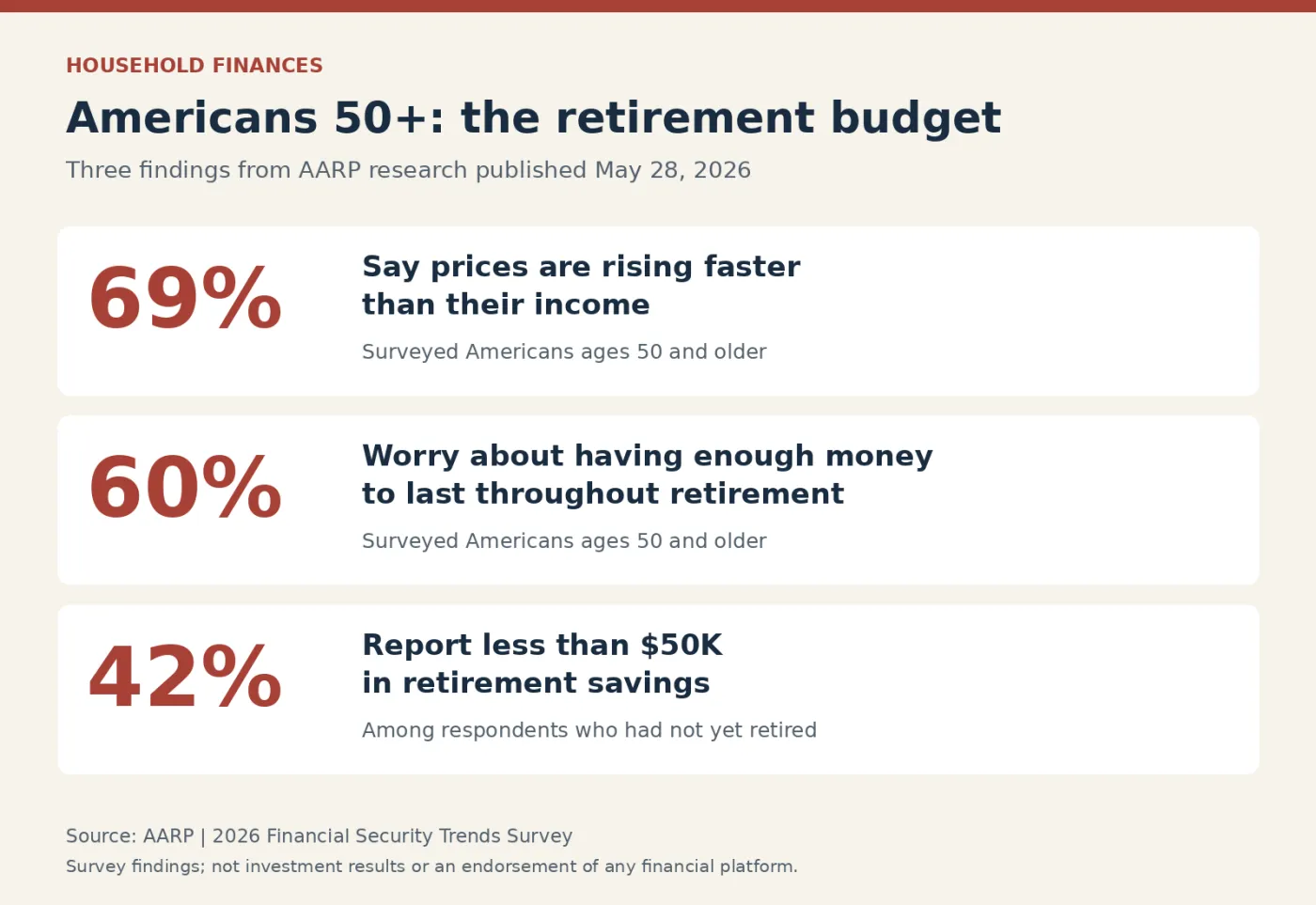
Research published by AARP in May found that 69% of surveyed Americans ages 50 and older said prices were rising faster than their income. Meanwhile, 60% worried about having enough money to last throughout retirement.
Among respondents who had not yet retired, 42% reported having less than $50K in retirement savings.
For someone still working, higher expenses can reduce the amount available to save. For someone already retired, they can change how much needs to be withdrawn each month.
The pressure does not always appear as a sudden crisis.
It may be a trip postponed, a repair delayed, or a smaller cushion left after the bills are paid.
Consider a hypothetical household that needs an additional $200 a month to cover the same expenses. Over a year, that adds up to $2,400.
This is an illustration, not a measurement of every household’s costs. But it makes the question concrete: what would cover that difference without undermining longer-term plans?
For some people, the answer may involve reviewing both spending and potential sources of income.
Additional income can help cover rising expenses. Its usefulness depends on what remains after fees and taxes, how regularly it arrives, and what risks must be taken to obtain it.
An investment with scheduled interest payments can provide a framework for planning potential cash flow. Whether those payments are received depends on the issuer meeting its obligations.
Before committing money, investors need to understand who owes the payments, what could interrupt them, and whether the investment can be sold when funds are needed.
Companies working in artificial intelligence need financing to develop and operate their businesses. Depending on the company, that work may involve software, computing infrastructure, or other products and services.
A company may raise financing by issuing bonds. Investors lend money under the terms of the issue, which specify the interest payments and repayment obligations.
The connection to AI comes from the issuer’s business. The investor’s potential income comes from the bond’s terms and the issuer’s ability to meet them.
A bondholder generally does not receive a share of every increase in the company’s profits or stock price. Likewise, strong interest in AI does not guarantee that a particular issuer will succeed or repay its debt.
WinVex sells bonds issued by companies working in the AI sector.
Its platform presents offerings with information intended to help users review their terms. The supplied interface displays issuer details, coupon rates, yields to maturity, prices, ratings, maturity dates, minimum investment amounts, and payment schedules.
The role of WinVex is to provide access to these bond offerings. The AI connection concerns the businesses issuing the bonds, rather than an AI trading system operating on the investor’s behalf.
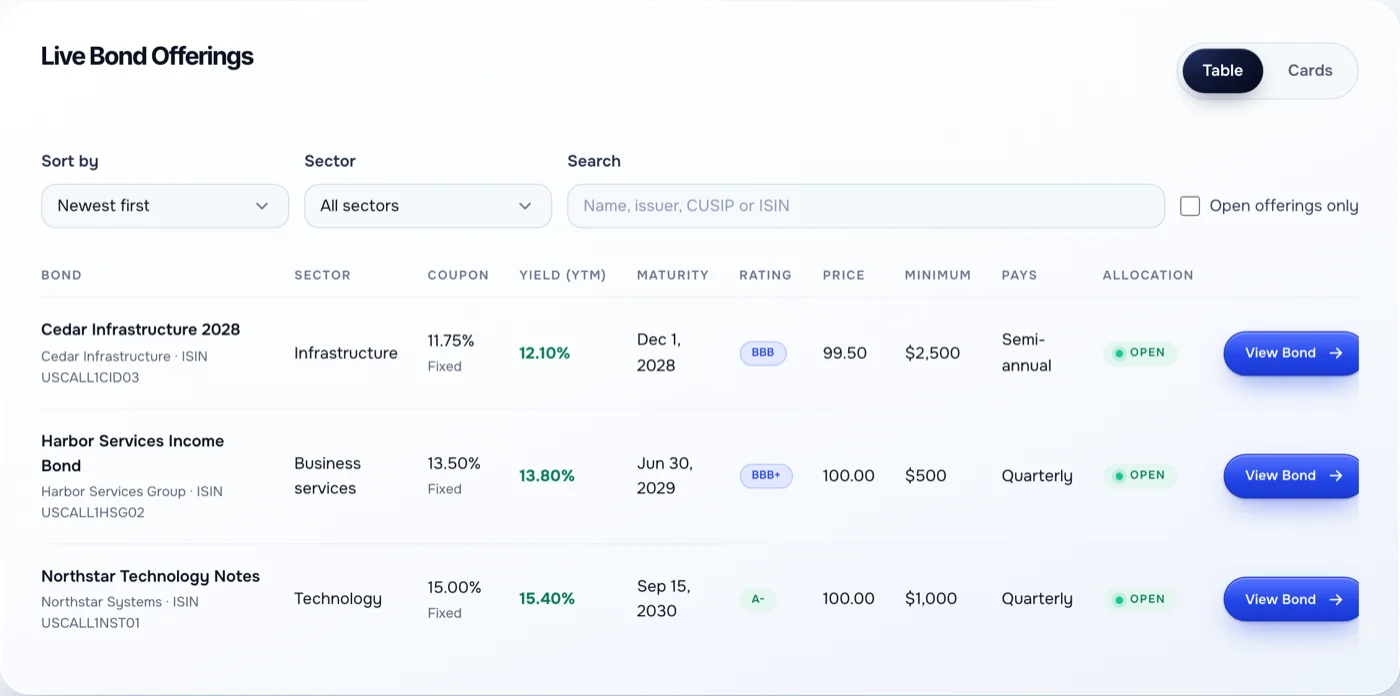
For someone considering bonds as a potential source of income, several details matter:
Yield to maturity is different from the coupon rate. It estimates an annualized return based on the purchase price and scheduled payments, subject to assumptions. It is not a guaranteed return.
Scheduled payments also do not automatically protect purchasing power. Unless the bond’s terms include an inflation adjustment, rising prices can reduce what those payments will buy.
An issuer’s involvement in AI is a starting point for research.
Investors should examine what the company actually does, how it earns revenue, what debt it already carries, and how it expects to fund interest payments and repay principal.
The offering documents should explain the relevant obligations, risks, and any protections that apply. Any displayed credit rating should be checked against its source and date.
A higher displayed yield should be assessed alongside these details. The technology story cannot replace an assessment of the issuer’s finances.
The following is an illustrative research timeline, not a customer testimonial or a record of investment returns. Take as much time as you need.
DAY 1 — Explore the Offerings. Start by reviewing the bond listings on the WinVex platform. Note the stated coupon rates, minimum investment amounts, maturity dates, and payment schedules. Identify the companies you want to understand better. Review what each company does in the AI sector and obtain the supporting offering documents. The goal for day one is simple: understand what is being offered and what questions remain.
DAY 3 — Look Beyond the Headline Rate. Compare the terms of the offerings you selected. Who is responsible for making payments? What fees apply? When is principal due to be repaid? What happens if you need your money before maturity? Review the stated payment frequency alongside your household budget. Quarterly or semiannual payments arrive at different intervals from monthly bills. Use this stage to clarify anything you do not understand before committing funds.
DAY 7 — Decide on Your Next Step. Bring together the information you have collected: issuer information, offering documents, costs, payment terms, and risks. Consider whether any offering fits your goals, investment horizon, and ability to absorb a loss. Your next step may be to request further information, seek independent advice, proceed after reviewing the terms, or decide not to invest. There is no requirement to make a decision within a week.
If submitting an inquiry leads to a call, a WinVex representative should explain the service, applicable requirements, fees, and where to find the relevant documents.
Before proceeding, prospective users should understand:
Submitting an inquiry should be clearly distinguished from making an investment.
A household cannot control inflation. It can review its expenses, income sources, and financial decisions.
Bonds issued by companies working in AI combine a familiar financing structure with exposure to businesses in a developing technology sector. Whether a particular bond is appropriate depends on its terms, the issuer’s financial position, and the investor’s circumstances.
Interest payments may help meet a defined goal, such as covering part of recurring expenses. But the amount invested, payment timing, fees, taxes, and potential losses all belong in that calculation.
What WinVex Offers
WinVex sells bonds issued by companies working in the AI sector.
Its platform presents offerings with information intended to help users review their terms: issuer details, coupon rates, yields to maturity, prices, ratings, maturity dates, minimum investment amounts, and payment schedules.
The role of WinVex is to provide access to these bond offerings.
See available offerings →
Understanding the Terms
Before you decide
Companies working in artificial intelligence need financing to develop and operate their businesses. A company may raise financing by issuing bonds; the connection to AI comes from the issuer’s business.
If submitting an inquiry leads to a call, a WinVex representative should explain the service, requirements, fees, and where to find the relevant documents.
Scheduled payments depend on the issuer meeting its obligations. Capital is at risk and returns are not guaranteed.
Two fields on the first step. A representative explains the rest.
Learn More About WinVex
Request information about the available bond offerings, the companies behind them, and the associated terms, costs, and risks.
Submitting an inquiry should be clearly distinguished from making an investment.
A WinVex representative will explain the service and its terms.
A shorter request: just the offering summary and the terms.